Showing posts with label Motivation. Show all posts

Sunday, December 11, 2016

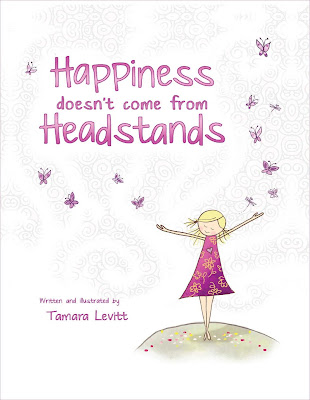
Happiness Doesn't Come from Headstands Book Review

Written as an alternative to The Little Engine that Could, Happiness Doesn’t Come from Headstands focuses on finding happiness within ourselves rather than from achieving an external goal.Happiness Doesn't Come from Headstands

Tamara Levitt (Author, Illustrator)
Wisdom Publications
Children’s Fiction

Publication Date: April 4, 2017


Leela and her best friend Lyle love to do yoga! They practice every week and can do a lot of different yoga positions. But there is one position Leela can't do: a headstand. No matter how hard she tries, it is impossible even when Lyle helps her! When Leela gets frustrated, Lyle reminds her of all the great things she can do. So instead of focusing on what Leela can't do, she focuses on what she can and she finds a lot of happiness along the way.

Written as an alternative to The Little Engine that Could, Happiness Doesn’t Come from Headstands focuses on finding happiness within ourselves rather than from achieving an external goal.

As one who likes setting and achieving goals, I was worried how the message of Happiness Doesn’t Come from Headstands might come across. Was it going to be an "everyone gets a trophy for trying so hard" type book? Thankfully, no! Happiness Doesn't Come from Headstands helps build the mindset that just because we cannot do something *yet* doesn't mean we have to be so frustrated that it ruins our day.

Rather than an alternative, I think Happiness Doesn't Come from Headstands would make a great paired text with The Little Engine that Could. It's important to set goals and work toward them, but it's sometimes not as simple as practicing and "thinking you can." Sometimes, even with a lot of hard work, we don't achieve a goal. It's important to have a healthy perspective on failure and challenges. Happiness Doesn't Come from Headstands helps provide that perspective.

If you’re interested in reading Happiness Doesn't Come from Headstands, you can purchase a copy here on Amazon


*A copy of this book was provided free of charge for an honest review.


------------------------------------------------

Get book suggestions for your kids right in your inbox!  
Sign up for my monthly newsletter by clicking here.   
------------------------------------------------ 


Monday, August 11, 2014

Positive Classroom Management: Caught You Being Good Jar

I LOVE this idea for positive reinforcement!  It's a "Caught You Being Good" Jar.

From Polka Pics

The original source suggests that parents add a cotton ball or a marble every time a they catch their child being good, but it is really easy to adapt this for classroom use.

Option One:
Any time your whole class is on task, being good, someone goes above and beyond, etc. add a cotton ball or a marble to the jar.  When the jar is full, the whole class gets a reward.  What is that reward?  You and your class should decide when you start so they know what they are working toward.

Option Two:
Any time you catch a student being good, write their name on a piece of paper and add it to the jar.   Then, when you need someone to make a copy, pass out papers, or help in any sort of way pull out a name.  

Rather than having 15 eager volunteers turn into one excited student and 14 disappointed ones whenever you need a helper, students will now know that their ability to be your special helper is determined by their positive behavior (and the luck of the draw).

If you use option two, make sure that you catch every student being good on a somewhat regular basis.  You don't want a student feeling like she can never do anything "good enough" to get her name in the jar.  


Have a great school-year!


Follow on Bloglovin

Monday, August 4, 2014

Teach Spelling and Grammar With Twitter

How amazing is this?


I can think of many students who would enjoy this, but for me there is one student in particular who comes to mind.  

We'll call him Johnny...

Johnny is a 6th grader who often questions why we need to learn how to spell since "computers just spell-check it for you!"

Also, Johnny knows that when he grows up he is going to be famous, an NFL player, and/or both so he won't need to know how to read and write: "I can hire people to do that for me!"

Any logical argument (let's say you are a famous NFL player but you break your leg and can't play anymore) is quickly shot down with an equally well thought out response: "That won't happen."

Working with Johnny can get frustrating at times.  Finding material that he finds interesting can be difficult.  Our library only has so many books on football, motocross, and extremely destructive natural disasters.  

Tweets, however, could be the ticket.  Terribly, horribly, misspelled and mis-punctuated tweets may just be my saving grace this year.  

They are short.  They are from people he looks up to.  And I just may be able to sneak in some learning with their help.

My only hope is that he does not see the irony here: The tweets actually prove his point.  If you play in the NFL, you don't need to know how to spell or use a period at the end of your sentence.


Follow on Bloglovin

Monday, March 31, 2014

Get Students Excited About Reading!

I've been reading over several blog posts, articles, and talking to teachers about the best ways to get students excited about reading.  Here are my top three favorites:


1. Dress up as a character!
By far, this strategy gets a reaction from students.  Young and old, too-cool-for-school and comfortable being goofy, boy or girl - all students notice this.  While some might try to play it off or laugh out of comfortableness, you will show your passion for reading, and students will respond to it.


2. Make a Space
This works for both the home and the classroom: Make a comfortable space where students can relax and focus on reading.  I've seen students trod  into my classroom, negative body language flying, but they then transform as they cross the room to my reading corner, grab a cushion, and settle in with a book.  You can see the gloom and tension melt away.  The transformation is palpable.  That comfortable, safe space provides so much more than a place to read.


3. Make A Connection
Tastier than Fried Worms?
Find a way to make reading connect to real life.  This can be done in many ways.  Pick your favorite scene, re-write it as a play, and act it out.  Have students compare and contrast themselves and the main character.  But my absolute favorite way to connect reading to life is to find a book with food in it and then make it!  Green Eggs and Ham?  How to Eat Fried Worms?  Charlie and the Chocolate Factory?  The Grapes of Wrath?

You might want to take a more abstract approach (substitute gummy worms for real worms), or get creative ans build a scene with food (angry grape people).  However you do it, food makes reading fun!


Reading becomes much more exciting when kids can see your passion, when they can relax and enjoy it, and when they see how reading relates to their lives.

Here are a few of the articles and blogs I read when brainstorming: The CornerstoneEdudemicMillion Words CampaignUniversity of Tennessee, and Imagine Learning

What are your favorite ideas and activities to get kids excited about reading?  Share in the comments below and feel free to include a link to your own blog post on the topic.


Friday, October 11, 2013

Friday Freebie: Pumpkin "Following Directions" Activity

Many of the students who see me for reading intervention struggle with other academic skills like following directions. To help emphasize why following directions is important and to open a discussion about directions in terms students can easily understand, I created this fun, fall-themed freebie: Pumpkin Design - A Following Directions Activity.

The steps are easy:
  1. Students design their own pumpkin.
  2. Students write out step-by-step directions on how to color a pumpkin exactly like they did in Step 1.
  3. Students get another student's directions and color a new pumpkin following those directions.
  4. Share and discuss the importance of following directions.
Here are a few examples from my class:

Monday, May 20, 2013

Excuses

As the end of the school year rolls around, are you tired of hearing excuses? (Or maybe even making them yourself?)


Tuesday, April 9, 2013

NPR: Angry Teens Need Happy Faces

Interesting Story from NPR: Would Angry Teens Chill Out if They Saw More Happy Faces?

Essentially people see a lot of "emotionally ambiguous" faces throughout the day.  How we feel internally is directly related to how we interpret this external ambiguity.  If we are depressed, we will see sadness.  If we are anxious, we will see fear.  And if we are aggressive, we will see hostility

The NPR story discusses an experiment that aimed to retrain how a sample group of troubled teens interpreted ambiguous faces. 

And guess what... it worked!  Check out the story get the details, but what this reminds me of is how important a teacher can be.

As teachers we are primary agents in creating the atmosphere of our classrooms.  If we enter our classrooms and approach our students in negative or even ambiguous ways, students may be confused and best and hostile at worst. 

So put a smile on your face, be positive, and make sure that you are contributing to the atmosphere you want in your classroom. 


Thursday, November 22, 2012

Ideas for the Classroom: Bear Hunt


This short two-day Thanksgiving week was going to be great.  I just knew it.  I was in a good mood.  My students were in a good mood.  What could go wrong? 

Well, pretty quickly Monday morning I realized that many of my students hit Thanksgiving overload.  They had done so many fun Thanksgiving activities in class, that coming down for reading intervention to find yet another thanksgiving activity left them less than enthused.

Glancing around the room for an idea as my disappointed second graders sat in front of me, I pieced together this game that I am calling “Bear Hunt.”   I used it all this week (all two days!) and my students love it.  Here it is:

Tuesday, November 20, 2012

Food For Thought


In Dr. Alec Couros’ short post Tips Up or Tips Down?, Couros recounts a missed learning opportunity with his son. 

The post is a powerful reminder that we as teachers and parents need to foster and deepen our students’ curiosity.  Technology can provide simple answers in an instant.  However, often more important than the answer is how we use our minds to find, discover, search, and create.  Technology is great, but when it replaces thinking it can become more of a hindrance than a help in the process of learning.

Again, Tips Up or Tips Down? is short, but it is well worth the quick read.


Monday, November 19, 2012

Reading Research Monday: Toxic vs. Positive Self Talk


One of our students was having a rough week last week, in his reading group.  I volunteered to take the student out into the hall so we could talk and walk around a bit to cool off.  Working with all ages of students from preschool through twelfth grade, I have encountered many reasons why kids break down: dad got a DUI, mom hasn’t been home for three days, a best-friend turned on a student, someone is bullying, a dog died, grandma is in the hospital, it’s just a bad day… the list goes on and on.  I knew the first grader I was working with had difficulty with his parents and I was expecting to hear his usual, “My mom was being mean.”  I wasn’t prepared for his reasoning this time.  When I asked him what was wrong, he turned and looked at me straight in the eyes and yelled, “I’m a jerk!”  He kept repeating it, “I’m a jerk!  I’m just a jerk!  There’s nothing I can do about it!  I’m a jerk!”  

Monday, October 15, 2012

Reading Research Monday: Parents' Influence on Student Performance

Today's Reading Research Monday isn't directly related to reading.  It is related to school in general, but implications for improving reading ability can be easily inferred.

Research

Published in the journal Research in Social Stratification and Mobility on September 5, 2012, Does Capital at Home Matter More than Capital at School?: Social Capital Effects on Academic Achievement examines how parents influence student performance. The study analyzes results from 10,000 12th graders.

Co-authors Dr. Toby Parcel, Dr. Mikaela Dufur, and Ph.D. student Kelly Troutman found that parents have more influence over student success than schools do.  Parcel summarizes their findings by stating:

The effort that parents are putting in at home in terms of checking homework, reinforcing the importance of school, and stressing the importance of academic achievement is ultimately very important to their children's academic achievement.

This new study is supported by many other sources including: Pamela E Davis-Kean's The Influence of Parent Education and Family Income on Child Achievement: The Indirect Role of Parental Expectations and the Home Environment, and the Michigan Department of Education's What Research says about Parent Involvement in Children's Education in Relation to Academic Achievement.

Monday, October 1, 2012

Reading Research Monday: Phonics Phones

When students, especially young students, read they often are so focused on decoding words and comprehending what they’ve read that they don’t have a good idea of what they actually sound like when they are reading.  Struggling readers might not know how long it takes them to sound out a word or that the sound they are actually saying out loud isn’t the sound they think they are saying.  One way to help with this issue is by using Phonics Phones (sometimes called Whisper Phones). 

Monday, September 10, 2012

Reading Research Monday: The Effects of Student Choice

The Positive Effects of Choice

Multiple studies from a variety sources specifically examine student choice as it relates to reading.  From these studies, many positive effects of choice are seen.

The March/April 2010 issue of Adolescent Literacy in Perspective discusses how providing students choice in reading gives them:

  • A sense of control
  • A sense of purpose
  • A sense of competence
A study of sixth graders by Kelly Peirpont from the University of Dayton comes to similar conclusions in The Effects of Student Choice on Reading Attitude and Comprehension.  Through qualitative and quantitative data, Peirpont finds that with choice:
Related Posts Plugin for WordPress, Blogger...